
“Why do I feel stiff, sore, and achy all the time? Am I just getting old?”
We hear this all the time at EVOLVE, and it doesn’t seem to matter how old people are. We’ve heard it from people in their 30s, 40s, 50s, 60s, and 70s
Here’s the short answer: most of what gets blamed on age is really about what has gone missing from your week. Less strength. Less speed. Less variety in how you move. Big efforts on the weekend with very little in between, and often not enough food to recover from any of it. Bodies do change as we get older, but those changes are slower and far more trainable than most people assume. You can stay athletic after 40, and well past it, if you train for it.
The “I’m feeling old” realization usually shows up after a surprise. A pulled hamstring at rec softball. A tweaked knee from dancing at a wedding (we see you, we feel you, and you’re not alone). A back strain from shoveling snow. Or the first ski day of the season leaves you feeling like you need a week on the couch.
Almost always, the explanation is the same: “Well, I’m not 25 anymore.”
But hear this clearly: You’re not broken, and you’re not destined to lose your athleticism.
The Myth of “I’m Just Getting Old”
If you Google “Why do I feel stiff and sore after 40?” you’ll get a pretty gloomy answer: muscle loss, decreased flexibility, slower recovery, joint pain. It makes decline sound inevitable.
That’s far from the whole story. Yes, bodies change with age, but you’re not powerless. You can feel strong, capable, and athletic well into your 40s, 50s, 60s, and beyond.
At EVOLVE, we’ve seen it firsthand, every day for almost a decade: people regaining strength, agility, and energy they thought were gone for good. There are real reasons you “start feeling your age,” and you can work on almost all of them.
What Happens to Athletic Performance After 40
So, at what age does athleticism decline?
Muscle mass and strength start a slow slide in your 30s if you don’t train them.
Power, which is your ability to produce force quickly, drops faster and earlier. Power is what lets you catch yourself when your foot clips a root, change direction on a ski run, or hop off a rock without thinking about it.
After 60, strength drops roughly 2% a year and power drops closer to 3%.
Here’s the good part. Strength, power, balance, and coordination all respond to training at any age. Athletic performance after 40 depends less on your birthday and more on whether anything in your week asks your body to stay fast and strong.
15 Reasons You Feel Stiff, Sore, or Injured as You Get Older
These are the most common reasons adults start to feel “old” in their bodies. None of them require you to train like a pro athlete to fix, and working on them is how you stay athletic after 40. Our strength training classes in Flagstaff are built around exactly this list.
1. You don’t move as much as you used to.
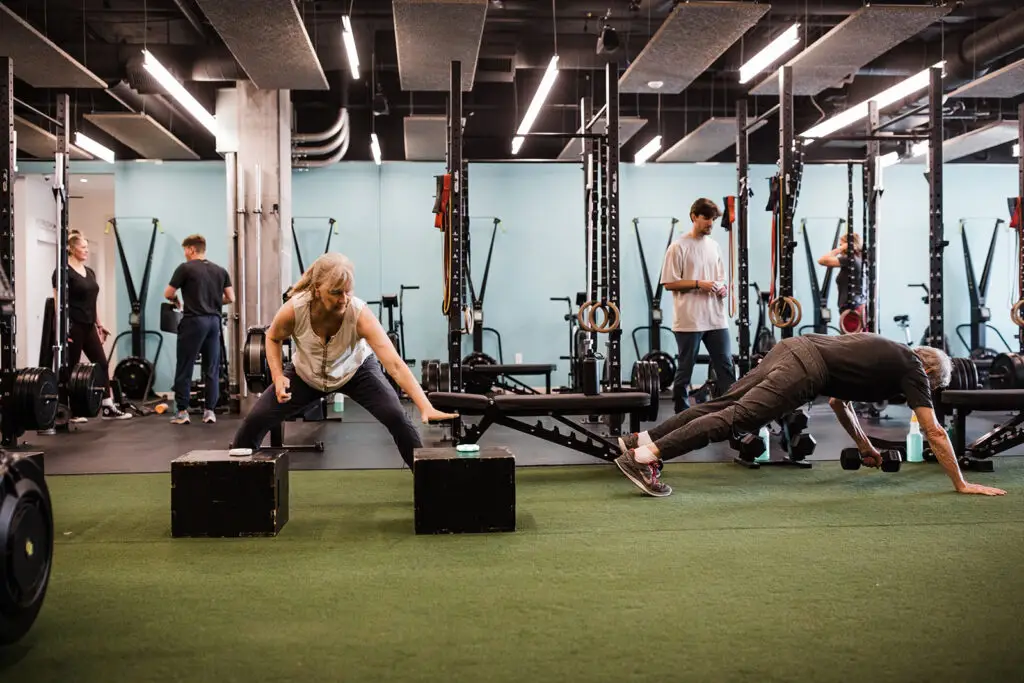
You don’t need to train like a pro. But you probably need more structure around how and when you move, more movement spread through your day, and more variety in the ways you move.
2. You only move in one direction and at one speed.
Hiking, cycling, and running are great. Life also asks for bursts, stops, twists, and changes of direction. If you never practice those, you’ll feel clumsy and more injury-prone when you need them.
3. You’ve forgotten how to play.
Gym culture tends to emphasize rigid technique. Technique matters, but an all-technique approach can strip out the spontaneity of play, which is something our bodies are built for.
4. You’ve lost strength.
Without strength training, muscle naturally declines starting in your 30s. You might not notice at first, but eventually tasks that were easy start to feel harder or riskier. The good news: with intentional training, you can gain strength as you age.
New to lifting? Our guide to strength training basics and how to start covers what counts as strength training, how often to train, and how to tell it’s working.
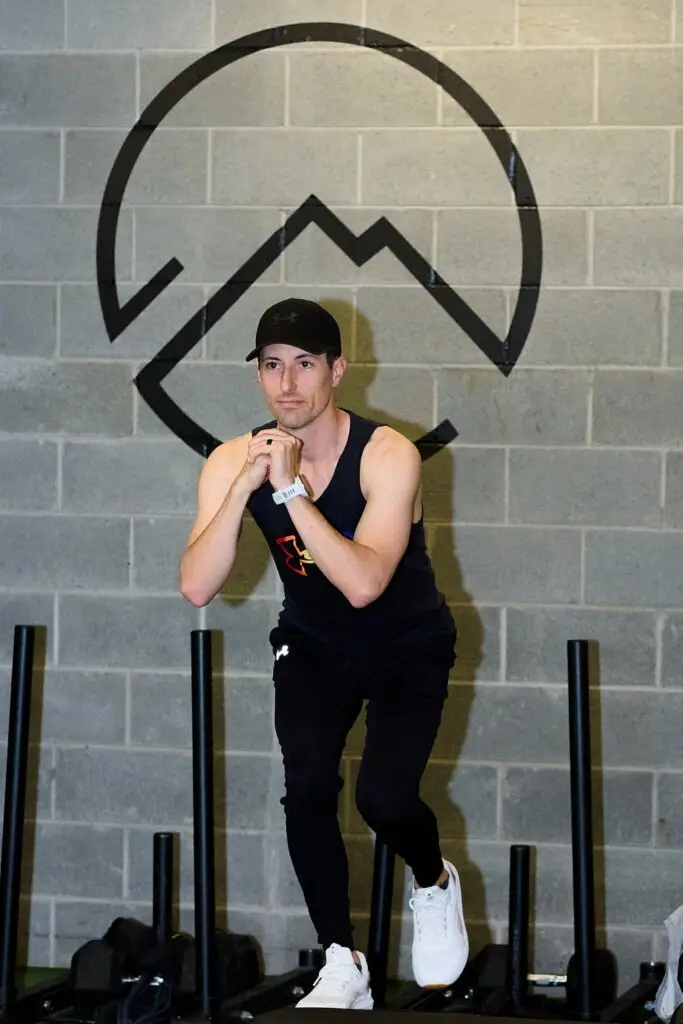
5. Your balance, coordination, and agility have faded.
These are trainable skills, not fixed traits. Most programs skip them in favor of things that are easier to measure, like a timed mile or a heavy squat. Short bouts of jumping and reactive movement are one of the simplest ways to bring them back.
6. You go hard on weekends, but not during the week.
In your 20s you might have gotten outside four or five times a week. Now work and family get in the way, so the big days come with long gaps in between. A purposeful gym routine fills those gaps and keeps you ready for the next adventure.
7. You’re doing workouts that aren’t right for your goals.
You don’t need to train like a CrossFit competitor or a powerlifter. You need a plan that fits where you are now and where you want to go.
8. Your workouts aren’t balanced.
Most plans overwork some muscles and neglect mobility, stability, or coordination. Over time that leads to imbalance and strain.
9. You follow a bodybuilder’s routine.
Muscle splits (chest day, arm day, and so on) can look organized, or overwhelming, but they rarely carry over to the multi-joint, full-body movement that daily life and outdoor sports require.
10. You’re only lifting light weights.
You didn’t strain your back because the suitcase was heavy. You strained it because you weren’t prepared to lift it. Training with real load builds the strength and confidence to handle the heavier moments of life.
11. You’re only lifting heavy weights.
Heavy is good. But without mobility, coordination, speed, and endurance work, you’re building a narrow skill set.
12. You’re not fueling your body well.
Under-eating, especially carbohydrates and protein, slows recovery, increases soreness, and drains your energy.
13. You’re trying to do it on your own.
No one is born knowing how to do this. Research shows that most people struggle to strength train effectively without guidance. Coaching isn’t a crutch. It’s expertise, and people who train with a coach or a class tend to stick with it longer and get stronger.
Not sure you need a coach? Why you should come to a workout class explains what coaching adds, from better technique to sticking with it longer.
14. You make a lot of jokes about getting old.
We’ve heard them all. A joke here and there is fine, but the story you tell about your body shapes what you’re willing to try. If “I’m too old for that” is your default, you’ll stop doing the things that keep you capable.
15. You’ve accepted decline as normal.
You can feel more athletic at 45 than you did at 25, with the right plan.
Coming Back From an Injury When You Don’t Trust Your Body
Some of the people we work with aren’t stiff so much as cautious. They’re coming back from an injury in their 40s or 50s, the tissue has healed, and they still don’t trust the knee, the back, or the shoulder to hold up when it counts.
That loss of trust is real, and it’s one of the most overlooked parts of recovery. Rest alone doesn’t rebuild it. What does is gradually and deliberately exposing the injured area to the things you’re afraid of: load, speed, landing, changing direction. Each time it holds up, your confidence grows.
If you’re still in pain or unsure what’s safe, start with physical therapy. If you’re past that stage but want a smaller group and more coaching attention first, Foundations is built to bridge rehab into regular training.
What Changes for Women in Their 40s and 50s
Women have an extra variable in this window. As estrogen declines through perimenopause, muscle, bone, and connective tissue become harder to maintain, and bone loss speeds up. The answer isn’t to train more gently. If anything, this is when heavier lifting and some impact work, like jumping and hopping, matter most, because those are the signals bone and muscle respond to.
For women in midlife: Strength training for women over 40 covers what to include, how heavy to lift, and the small weekly dose that makes a difference.
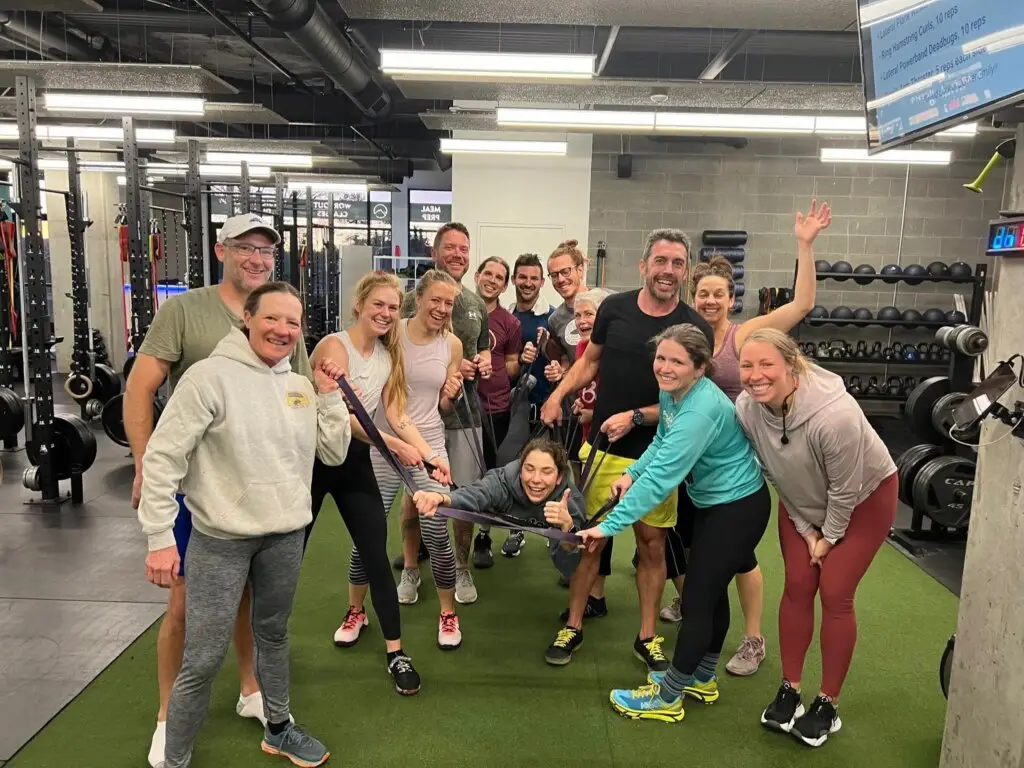
The EVOLVE Approach: Aging Athletically
At EVOLVE Flagstaff, our goal isn’t to turn you into a gym rat. It’s to keep you strong and capable for the things you love outside the gym: skiing, hiking, climbing, or chasing your kids and grandkids.
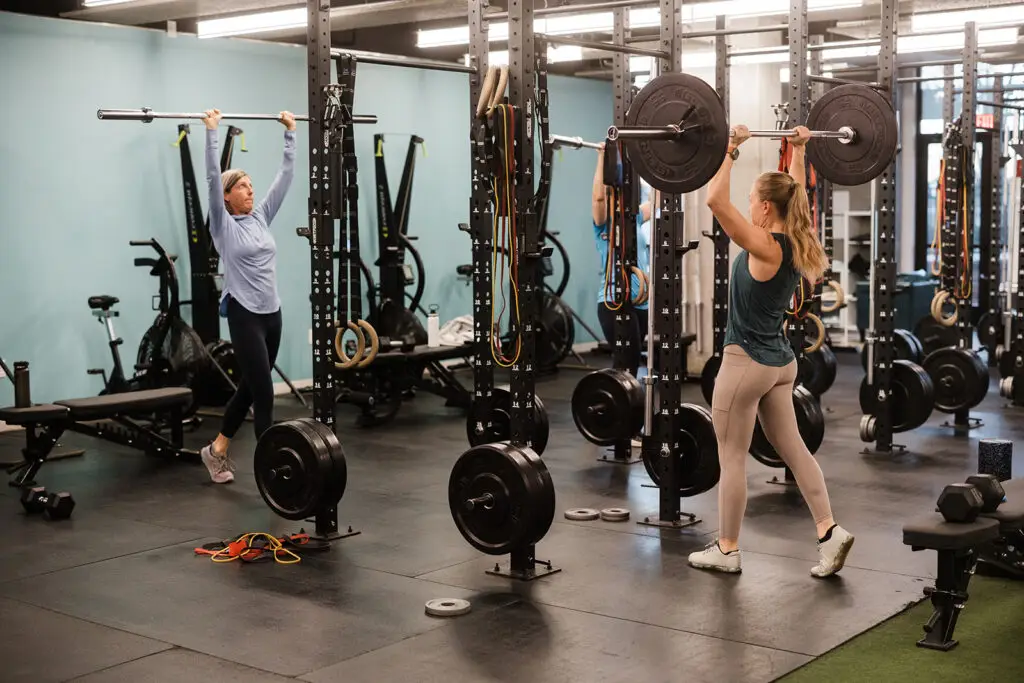
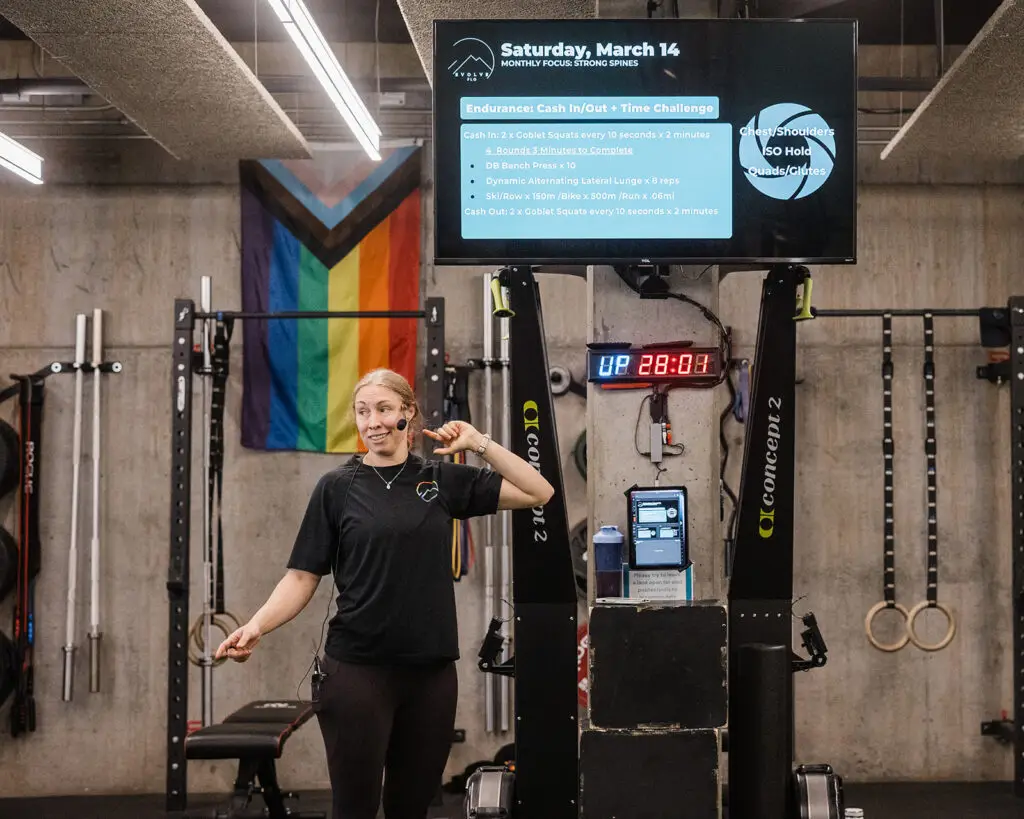
Our EVOLVE Strong program is built for adults who want to stay athletic after 40 and beyond. Every class follows the same structure (warm-up, strength, resilience, and endurance), and the program is designed to help you:
- Rebuild strength and power
- Restore mobility and balance
- Reduce injury risk with smarter training
- Keep your body resilient for decades
“As someone who’s trying to slide confidently into her 40s, Evolve has delivered a trifecta of benefits: strength, endurance, and mental fitness.”
– Katharine S., EVOLVE member
You’re not “too old.” You need the right plan, and that’s what EVOLVE Strong provides.
Ready to Feel Athletic Again?
Don’t settle for decline.
If you’re an active Flagstaff adult who wants to stay athletic after 40, 50, or 60, EVOLVE Strong is built to do exactly that. It works for people who’ve never touched a barbell and for experienced athletes who want a real challenge. Your first class is free.
Start Rebuilding Your Athleticism
Strength, power, balance, and agility, coached and built around the activities you do in Flagstaff. Your first class is on us.