We hear it almost every day: at some point in your 40s, something starts to feel different.
Maybe the hike you used to do on a whim now takes two days to recover from. Maybe you’ve watched a parent lose strength and independence, and you want a different future.
You’ve gathered that you should be lifting weights. You may also be wondering if you need to get in shape first, whether it’s safe, and whether you’ll feel out of place.
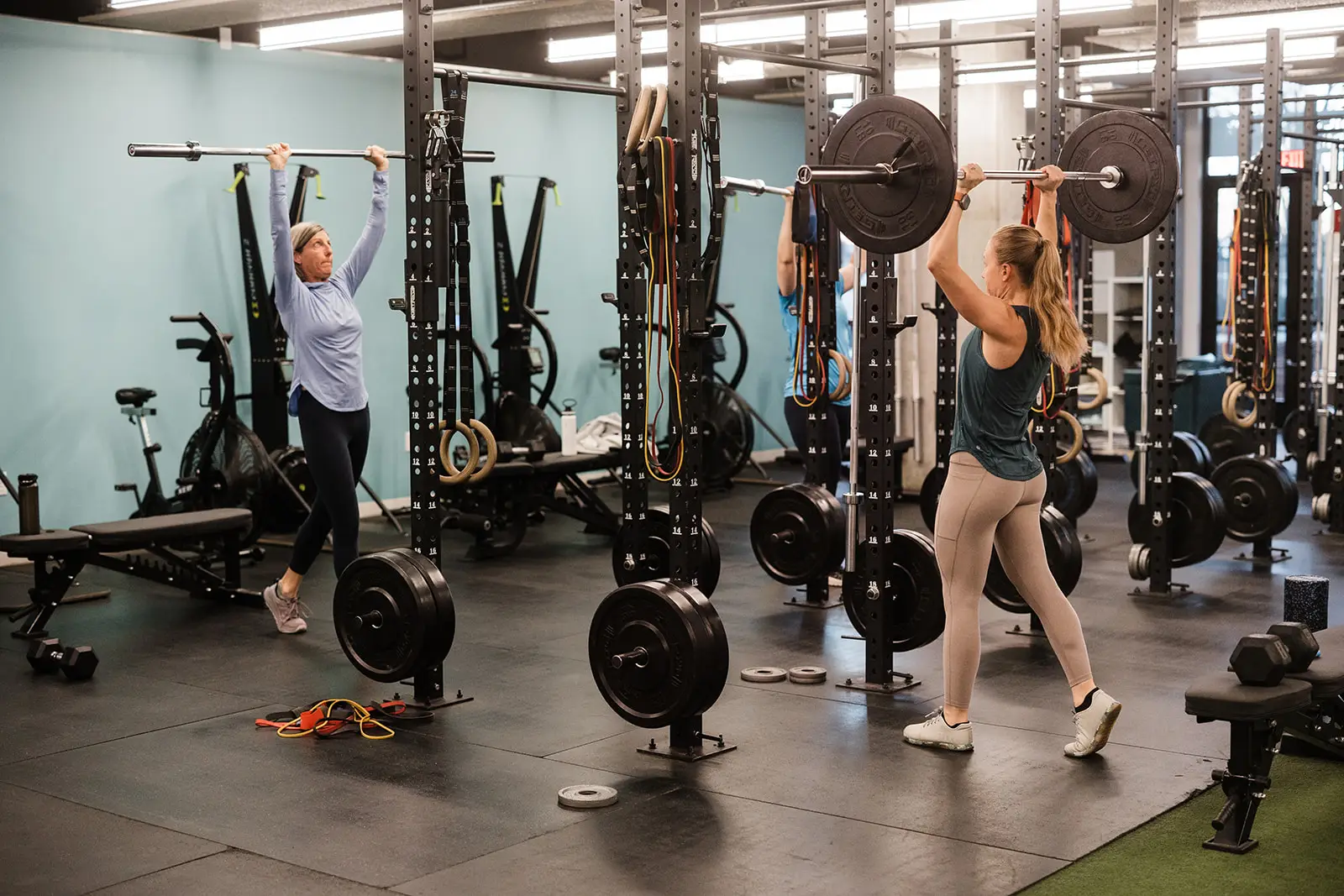
Here’s the short version. Strength training for women over 40 is one of the most effective things you can do for your muscles, your bones, your balance, and your long-term independence. Two sessions a week of challenging, well-coached lifting is enough to make a real difference.
You do not need to be fit before you begin. You do not need to know how to lift. And you do not need to prove anything during your first workout.
What changes after 40, and what you can do about it
Strength and muscle begin declining earlier than most people realize. Hormonal changes during perimenopause and menopause can speed up losses in muscle and bone.
Those changes are not a reason to become more cautious and do less. They are a reason to start (or keep) training with more purpose.
Strength training can help you:
- Preserve and build muscle
- Maintain stronger bones
- Improve balance and coordination
- Keep hiking, running, skiing, biking, climbing, and traveling
- Make everyday tasks feel easier
- Reduce your risk of falls and loss of independence
Power, the ability to produce force quickly, can decline even faster than maximum strength. Power is what helps you catch yourself when you trip, get out of a low chair, and move confidently on uneven ground.
The good news: strength and power stay highly trainable as we age.
New to lifting? Our guide to what strength training is and how to start covers what counts, the main benefits, and how to tell it’s working.
What should strength training for women over 40 include?
Any movement is better than none. Walking, hiking, yoga, and cycling all have real benefits.
But they do not replace strength training. An effective program builds in a few key elements over time.
1. Meaningful resistance
Your muscles and bones need enough resistance to give them a reason to adapt.
That does not mean starting with the heaviest weight you can lift. It means starting at the right level, learning good technique, and adding weight as you get more comfortable.
2. Full-body training
A well-rounded program trains your upper body, lower body, and core through basic patterns: squatting, hinging, pushing, pulling, carrying, and rotating.
This builds strength that carries over to real life, not just to one machine or exercise.
3. Balance, coordination, and moving in different directions
Life does not happen in a straight line.
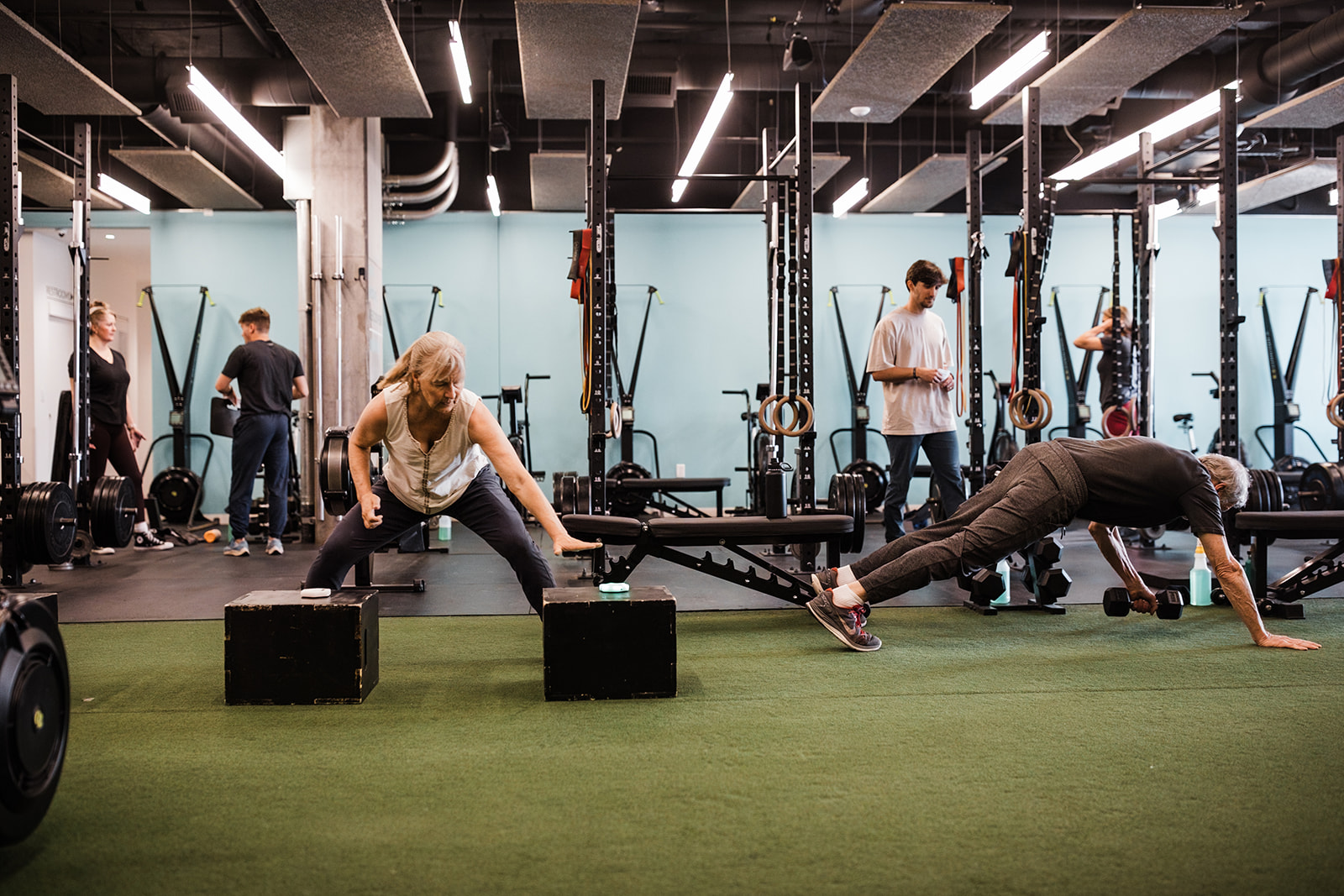
Moving sideways, changing direction, balancing on one leg, and reacting to your surroundings all help you stay athletic and capable. These qualities matter more as we age, yet many fitness programs barely touch them.
“Evolve has changed my life. I know that sounds dramatic, and I am not one to write reviews, but it’s true. I am a 60 y/o post-menopausal woman who has been struggling to feel strong as I age. Evolve classes have helped me gain strength that I didn’t know I had.”
-Tricia S., EVOLVE Member
4. Power and impact, when appropriate
Jumping, hopping, landing, and moving quickly can support bone health and help preserve power. We explore this in Why reactive movement belongs in every active adult’s training.
These should be introduced at the right time and scaled to you. You do not need to jump on your first day, or ever do a movement that doesn’t feel right for your body.
5. A program you can follow consistently
You do not need to train every day. The next section covers how often is enough.
Lifting heavy after 40: how heavy, how safe, and how often
This is where most women have been given the wrong advice. For decades the message was light weights and lots of reps. Bone and muscle respond best to something different.
How heavy?
Bone and muscle adapt when the load is challenging. Light weights you could lift all day don’t give them much reason to change.
In practice, a challenging set is one where the last couple of reps are slow and clearly hard, but your form holds. You should finish feeling like you had one to three reps left, not like you hit failure.
You don’t start there. A coach will have you learn the movement first, then add weight over weeks, not days.
How safe?
Heavy lifting has a reputation it hasn’t earned.
The best-known study here is the LIFTMOR trial. Postmenopausal women with low bone mass, including many with osteoporosis, trained twice a week for eight months. They worked up to five sets of five reps on deadlifts, squats, and overhead presses at roughly 80 to 85% of their max, plus jumping drills.
They improved bone density at the spine and hip, and got better on tests of strength and function. The supervised program was well tolerated, with one minor muscle spasm reported across the whole trial.
Most of these women were new to heavy lifting, and their bones were fragile. They were coached carefully and progressed gradually. That’s the model: heavy enough to matter, built up with good coaching.
Doing nothing isn’t risk-free either. Without strength training, we gradually lose the muscle, bone, and balance that help us handle falls and everyday demands.
How often?
Twice a week is a real program, not a compromise. Two full-body sessions of 30 to 45 minutes cover the basics.
If that feels like a lot right now, start with one. Research reviews of minimal-dose training show that beginners can build strength with one session a week, especially in the first few months. One session is a great start. Two is a great target.
The worries that keep women from starting
Many women put off strength training because they feel nervous, self-conscious, or unsure what to expect. These worries are common. If you have them, you are exactly who we built EVOLVE to welcome.
Nervous about walking in? How to overcome gym anxiety walks through the worries we hear most and the small steps that make a first visit easier.
“I’m worried I’ll look like I don’t belong”
This is one of the most common things we hear before women start.
Many gyms make people feel like they should already know what they’re doing. Machines are unfamiliar. Experienced members move around confidently. It can seem like everyone else got an instruction manual you missed.
You are not supposed to know everything before you arrive.
At EVOLVE, coaching is part of the service. Asking questions and needing help are normal parts of training, not signs you’re doing something wrong.
Plenty of our members started with no lifting experience. Others came back after years away, an injury, surgery, or a major life change.
“What if everyone is watching me?”
You’ll have to trust us on this one: they aren’t.
Most people are focused on their own workout, listening to the coach, or trying to remember what comes next.
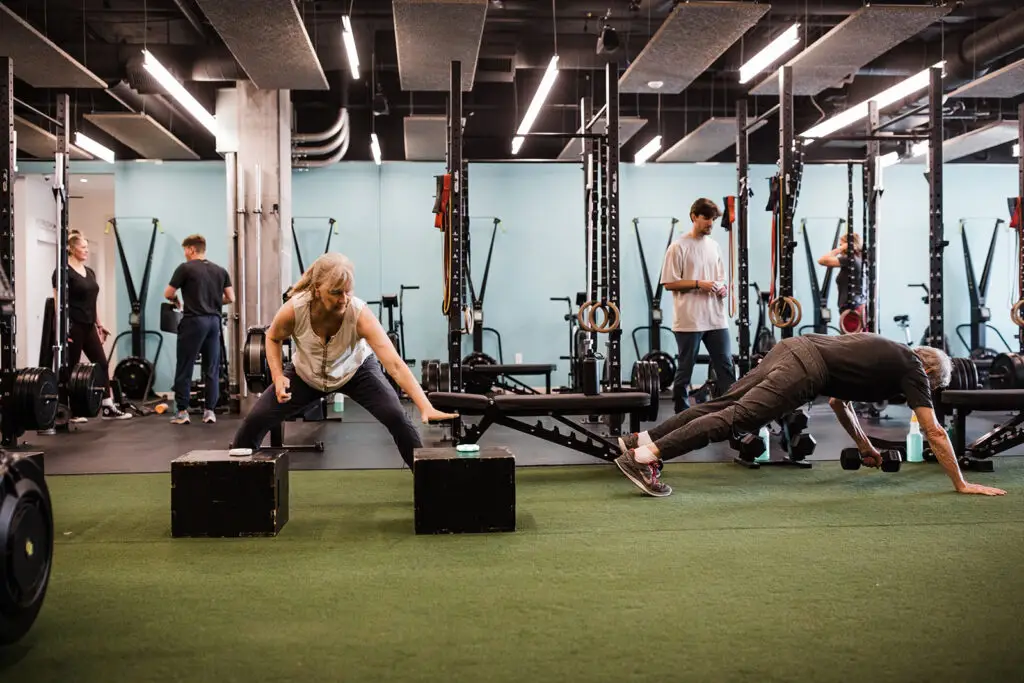
EVOLVE classes are coached, so you won’t be left to figure out the workout alone. People in the same class often use different weights or variations. That’s normal. It isn’t a sign anyone is ahead or behind.
“What should I wear or bring?”
You do not need special shoes or expensive gym clothes.
Wear comfortable clothes you can move in and shoes you feel stable in. Bring a water bottle if you’d like.
That’s it.
“Am I too out of shape to start?”
No.
You don’t need to get fit before strength training any more than you need to get strong before lifting. Your starting point is simply information. It helps your coach choose the right exercise, weight, and pace for you.
The goal of your first workout is to leave feeling successful, not demolished.
“Will lifting heavy weights make me bulky?”
Building large amounts of visible muscle is slow and difficult. It does not happen by accident.
Most women notice strength gains well before changes in muscle size. The first benefits are usually everyday ones: carrying groceries more easily, feeling steadier on a trail, or lifting luggage without thinking twice.
Building muscle isn’t an unfortunate side effect, either. It supports bone health, metabolic health, resilience, and independence.
“What if I get hurt?”
Strength training is very safe when exercises are taught well, progressed gradually, and adjusted for the individual. That is what coaching is for, and what we do in every EVOLVE Strong class.
If you’re currently in pain, physical therapy is the right place to start. If you’re not in pain but would like a smaller group with more individual coaching, Foundations semi-private training may be a better fit.
“As someone who’s trying to slide confidently into her 40s, EVOLVE has delivered a trifecta of benefits: strength, endurance, and mental fitness. The team is smart and inclusive. The workouts are expertly designed and adaptive. The community is funny and the space is bright.”
–Katharine S., EVOLVE member
What your first EVOLVE class looks like
Walking through the door is often the hardest part. After that, we make it simple.
Your coach will welcome you, ask a few questions about your experience, goals, and injury history, and show you around. This isn’t a test. It just helps us coach you well.
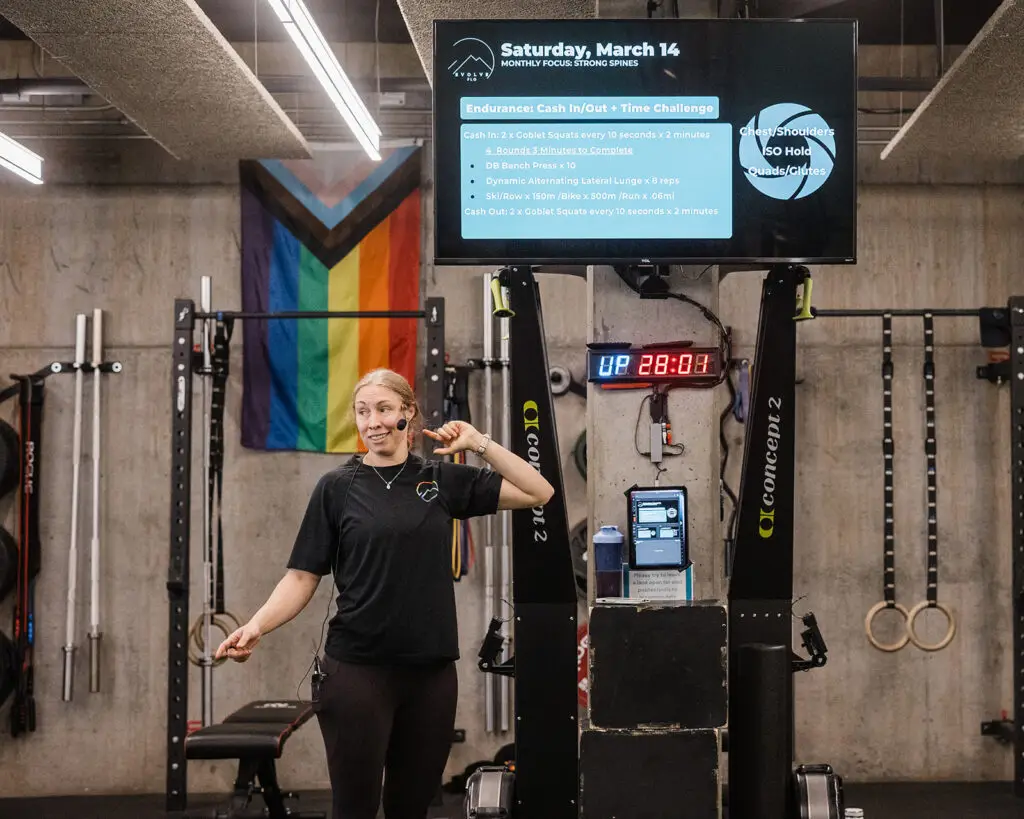
Then your coach leads you through a warm-up and a full-body workout, helping you pick the right variations and weights along the way. You can use lighter weights, modify an exercise, or stop and ask a question anytime.
There is no way to fail your first class.
A class also gives you what’s hardest to build alone: a structured program, coaching on technique, steady progression, accountability, and a community that’s glad you came. For more on that, read why workout classes work better than training alone.

Why strength training matters in Flagstaff
Flagstaff asks a lot of a body.
Descending Elden means thousands of steps while your legs absorb force. Skiing, riding in Sedona, trail running, climbing, backpacking, and shoveling snow all take more than cardio fitness. They take strength, balance, power, and the ability to move in different directions.
Many Flagstaff adults have excellent endurance while quietly losing strength and muscle. Strength training doesn’t compete with the activities you love. It protects your ability to keep doing them.
That’s why our strength training classes in Flagstaff combine strength, conditioning, balance, and agility. The goal isn’t to make the gym your whole life. It’s to help your body support the life you want outside it.
Active, but feeling stiffer every year? How to stay athletic after 40 explains why soreness and slower recovery usually aren’t just age, and what to train instead.
You don’t have to feel ready before you begin
Many of our members didn’t think of themselves as “gym people” before they came to EVOLVE.
They wanted to feel stronger, stay active, protect their long-term health, and get enough support to begin.
You don’t need to know what you’re doing yet. That’s what coaching is for.
You only need a starting point.
Ready to feel stronger?
Try your first EVOLVE Strong class free.
You’ll meet your coach, learn how the class works, and complete a full-body workout adapted to your starting point.
Prefer a smaller group and more individual coaching? Explore Foundations semi-private training.