Gut issues in endurance athletes can turn a great training day into a search for the nearest bathroom. Nausea, bloating, cramping, diarrhea—if you’ve been there, you know.
And yes, we will be dropping the D bomb in this article and talking about very normal bodily functions. If you’re squeamish… stick with me, especially if your gut keeps interrupting your training.
Many athletes have a story about jumping behind the nearest tree and sacrificing a favorite sock. Or heading out for a long Sunday ride and battling breakfast so it doesn’t make an appearance for round two.
It’s easy to assume this is simply part of your sport. Because you’re hardcore, right?
No. It doesn’t have to be this way.
The starting point is usually to look at your everyday fueling, what and when you eat before exercise, hydration, and the demands of the workout itself. Your gut also deserves some practice with race-day nutrition.
I wish there were a one-size-fits-all recommendation. Unfortunately, what works for your riding buddy may send you straight into the bushes. Here’s how to start figuring out what works for you.
Why do gut issues in endurance athletes happen?
During exercise, your body redirects blood toward working muscles and the skin. Your digestive system may have a harder time keeping up, particularly during hard efforts or hot conditions.
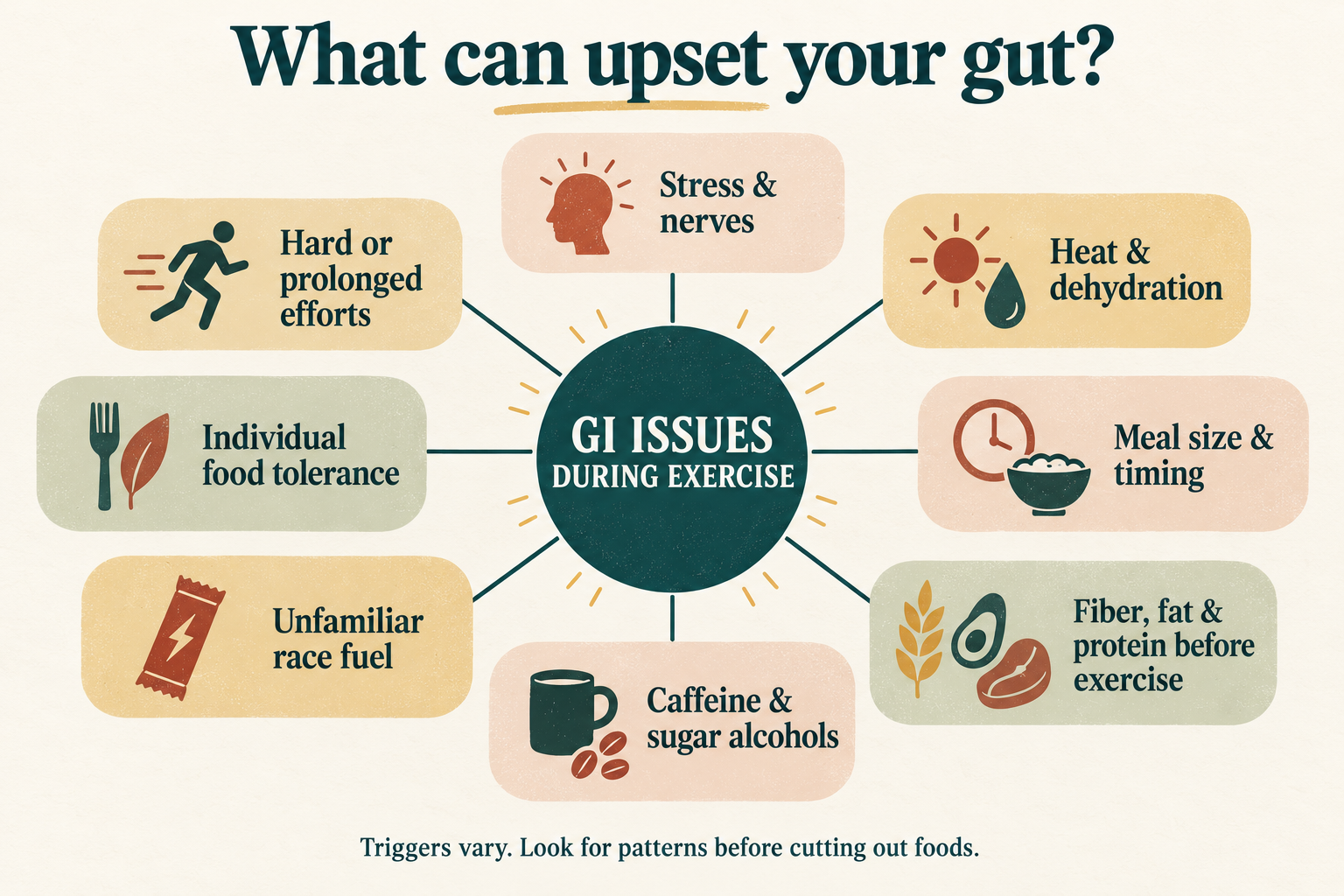
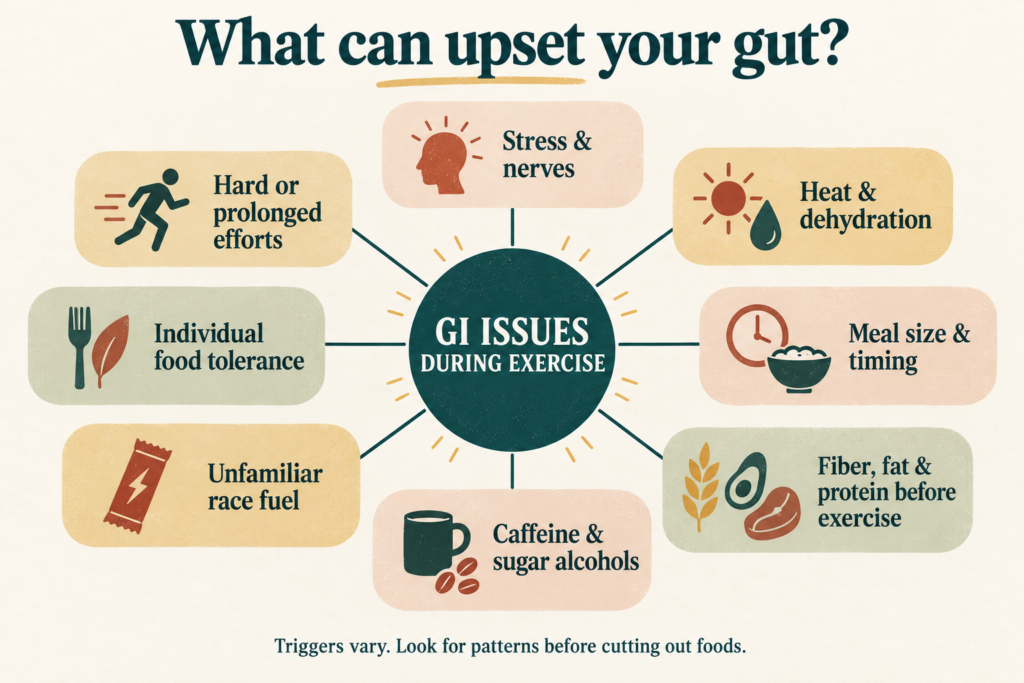
Stress, food timing, fluid intake, and individual food tolerance can add to the challenge. Sometimes several factors show up together.
That doesn’t mean your gut is broken or that you need to eliminate half your diet. It means we need to look at the situation.
Before blaming your last gel, ask yourself: Am I eating enough throughout the day? Fueling training consistently? Giving myself time to digest? Recovering between sessions?
The goal is to support your body, not create another list of foods you’re afraid to eat.
1. Nerves: Give yourself time to downshift
Your gut and brain are in constant communication. Training stress, work stress, family stress, and pre-race nerves can all enter the conversation.
What to try: Build a little breathing room into your routine.
Before a race or workout, take a few slow breaths. Go for a short walk or ease into your warm-up. I personally love throwing my headphones in and doing some stretching and activating. It helps me get out of my head and more into my body.
Outside of race morning, make room for recovery and lower-intensity days. Walking, reading, gentle yoga, or a little unstructured time can help you manage stress.
You don’t need to become a meditation expert. Start with a few minutes.
2. Constipation: Look at your everyday routine
If things aren’t moving before you start exercising, your workout probably won’t feel great.
What to try: Give your bathroom routine some attention.
Regular meals, adequate fluids, and regular physical activity can support bowel regularity. Leave yourself time to use the bathroom rather than racing from bed to the trailhead.
Fiber can help with constipation, but suddenly adding a giant salad or a handful of prunes before a run may create a different problem.
Make changes gradually. If constipation persists, get help rather than repeatedly trying to solve it on race morning.
3. Gut rot: Adjust your pre-workout meal
Your intestines need blood flow to digest food. Hard exercise can make that job more challenging.
What to try: Pay attention to meal size, composition, and timing.
A large meal heavy in fat, fiber, or protein may sit differently than a smaller carbohydrate-rich snack. Try toast, a banana, or another familiar food you tolerate well.
That yummy seedy bread with eggs and cheese can still have a place in your day. Right before a hard run may not be its moment.
Also, give yourself time to digest. The same breakfast may feel completely different when you eat it several hours before exercise instead of as you’re walking out the door.
Training hard but something still feels off?
Your gut isn’t the only thing that can feel off when you’re training hard. If you have abnormal bloodwork despite “seeming healthy,” such as elevated hemoglobin A1c, your fueling and recovery deserve a closer look, too.
Read: Why Endurance Athletes Can Have Elevated A1c
4. Hydration: Find the amount that fits you
Dehydration can make exercise-related gut problems worse. But forcing down more and more water isn’t the answer either.
What to try: Practice your hydration approach during training.
Your fluid needs depend on sweat losses, weather, exercise duration, and access to drinks. Start exercise hydrated, and avoid trying to catch up with a huge amount all at once.
Long, hot sessions may also require sodium replacement. Sports drinks can contribute both fluid and fuel.
There isn’t one daily water formula or drinking schedule that works for every athlete. Individualized fluid replacement helps avoid both dehydration and overdrinking.
If your stomach is repeatedly sloshing or you’re struggling to drink comfortably, that’s useful information to bring to a sports dietitian.
5. Sugar alcohols: Read your labels
Bloating, gas, and diarrhea can sometimes come with the “sugar-free” territory.
Some products contain sugar alcohols such as sorbitol, mannitol, or xylitol, which can trigger symptoms in some people. These aren’t the same as every other low-calorie sweetener, and tolerance varies.
What to try: Check what’s in your bars, powders, drinks, and other supplements.
If you notice a pattern, test an alternative during training. Change one thing at a time so you can tell what helps.
“DID A DIETITIAN JUST TELL ME TO EAT SUGAR?”
Yep, I did. Carbohydrates help fuel endurance exercise. A product being sugar-free doesn’t automatically make it a better choice for your workout.
6. Caffeine: Count more than your coffee
Coffee can help you get moving. Sometimes in more ways than you intended.
What to try: Pay attention to timing and total intake.
If you need coffee to speak or function, leave enough time in your morning for coffee and some quality time on your porcelain throne.
Also, READ YOUR LABELS. Gels, chews, and sports drinks may contain caffeine. Your usual coffee plus several caffeinated gels can add up quickly.
If caffeine seems to trigger symptoms, experiment with less or choose uncaffeinated fuel. Test the change during training so race morning feels familiar.
7. Too much bulk: Adjust fiber timing
Fiber helps keep things moving day to day. Right before a race, a large amount may create more movement than you bargained for.
What to try: Adjust the timing rather than declaring war on vegetables.
If fiber seems to trigger symptoms, experiment with lower-fiber choices before a long or hard session. Some athletes also benefit from temporarily reducing fiber before an event.
This is a short-term adjustment, not a reason to avoid fiber all season.
Keep eating enough. Swapping a high-fiber food for a lower-fiber option is different from simply removing food and heading out underfueled.
8. Unfamiliar race fuel: Practice with your gut
You train your legs and lungs. Your fueling deserves practice, too.
What to try: Rehearse eating and drinking during training.
Practice with the foods, gels, drinks, and timing you plan to use during your event. Start with amounts you tolerate and adjust gradually.
Research-based guidance on exercise-related GI symptoms supports gut training and individualized fueling strategies.
That doesn’t mean forcing food through severe symptoms. It means giving yourself time to learn what works.
Race morning is a terrible time to discover that the new gel disagrees with you. When possible, find out what the aid stations will offer and practice with those products beforehand.
9. Suspected intolerances: Look for patterns before restricting
Sometimes a particular food or ingredient is part of the problem. But one bad run doesn’t tell you exactly what caused it.
What to try: Keep a simple record.
Note what you ate, when you ate it, the workout, the conditions, and when symptoms started. You don’t need to track every bite forever. You’re looking for a useful pattern.
Maybe symptoms happen after a particular product. Maybe they only happen when you eat immediately before a hard session. Those are different problems.
Bring that information to a registered dietitian before cutting out entire food groups. Don’t jump straight into a gluten-free or another restrictive elimination diet on your own.
Managing gut issues in endurance athletes should include keeping athletes well nourished. The goal is to understand your symptoms while protecting your ability to fuel training.
Unexpected cholesterol levels? Look at the bigger picture.
Endurance training unfortunately doesn’t make you immune to health concerns. This companion article explores underfueling and cholesterol—and why your training and nutrition history matter.
Read: High Cholesterol in Endurance Athletes
What should you try on your next training day?
Pick one manageable change rather than overhauling everything.
That might mean eating breakfast earlier, choosing an un-caffeinated gel, or testing a lower-fiber pre-run snack. Keep the rest of your routine reasonably consistent so you can learn something from the experiment.
Afterward, ask:
What did I change?
When did symptoms start, if they happened?
Was the workout harder or hotter than usual?
Could I comfortably eat and drink?
What would I repeat or adjust next time?
One good session doesn’t prove you’ve solved everything. One difficult session doesn’t mean you’ve failed. Look for patterns across training.
When do gut symptoms need medical attention?
Not every gut issue is a fueling issue.
Seek prompt medical care for warning signs such as blood or black, tarry stool, severe abdominal pain, frequent vomiting, or dehydration.
Persistent or recurring symptoms also deserve evaluation, especially if they happen outside of exercise. You don’t have to wait until they ruin a race.
Get help with gut issues in endurance athletes
Still planning your routes around bathroom stops? Confused about what to eat before a long run? Let’s figure it out.
In a dietitian consultation, we can look at your symptoms, everyday eating, training demands, and fueling routine together.
You don’t need to arrive with the answer. Bring your questions, your training routine, and whatever patterns you’ve noticed.
The goal is to help you eat enough, feel better, and get back to doing what you love.