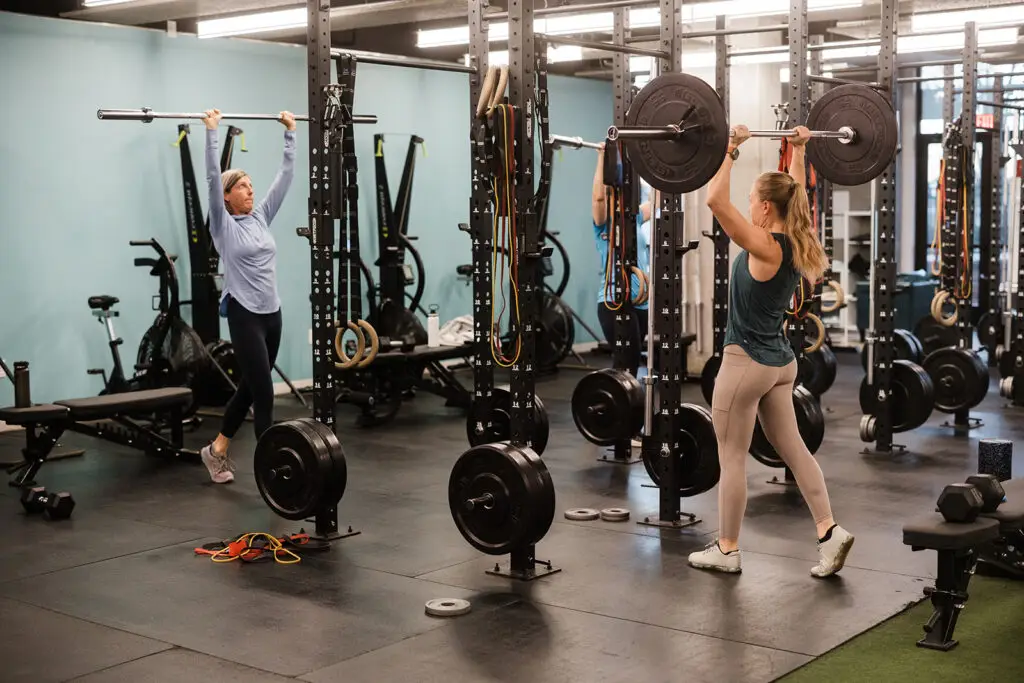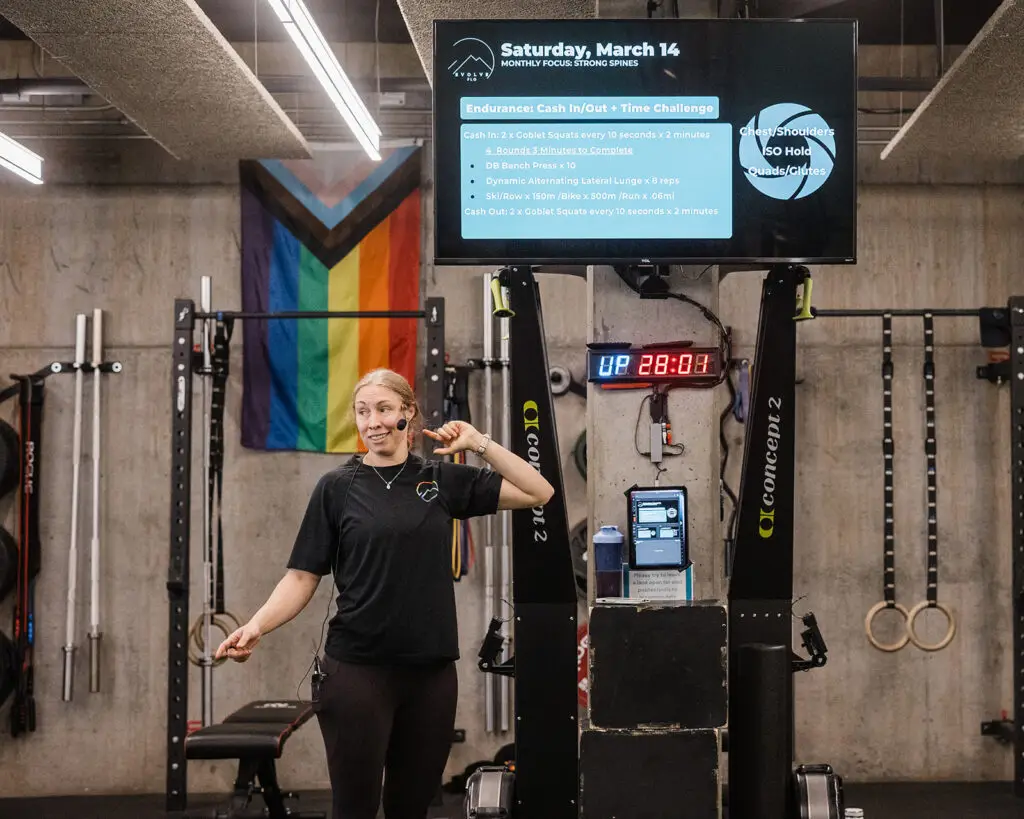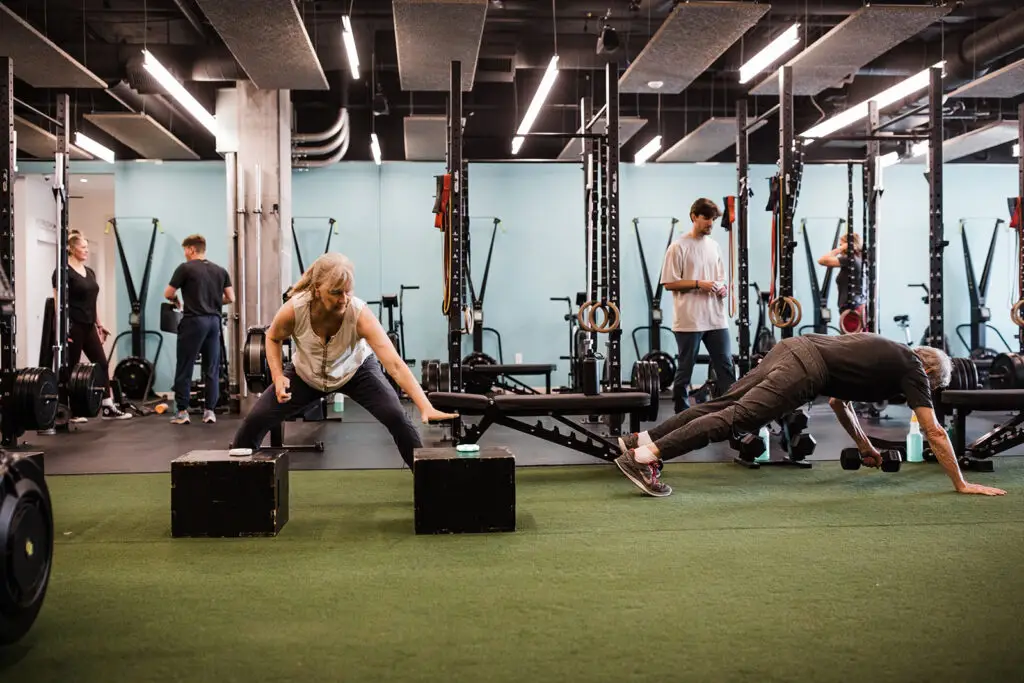
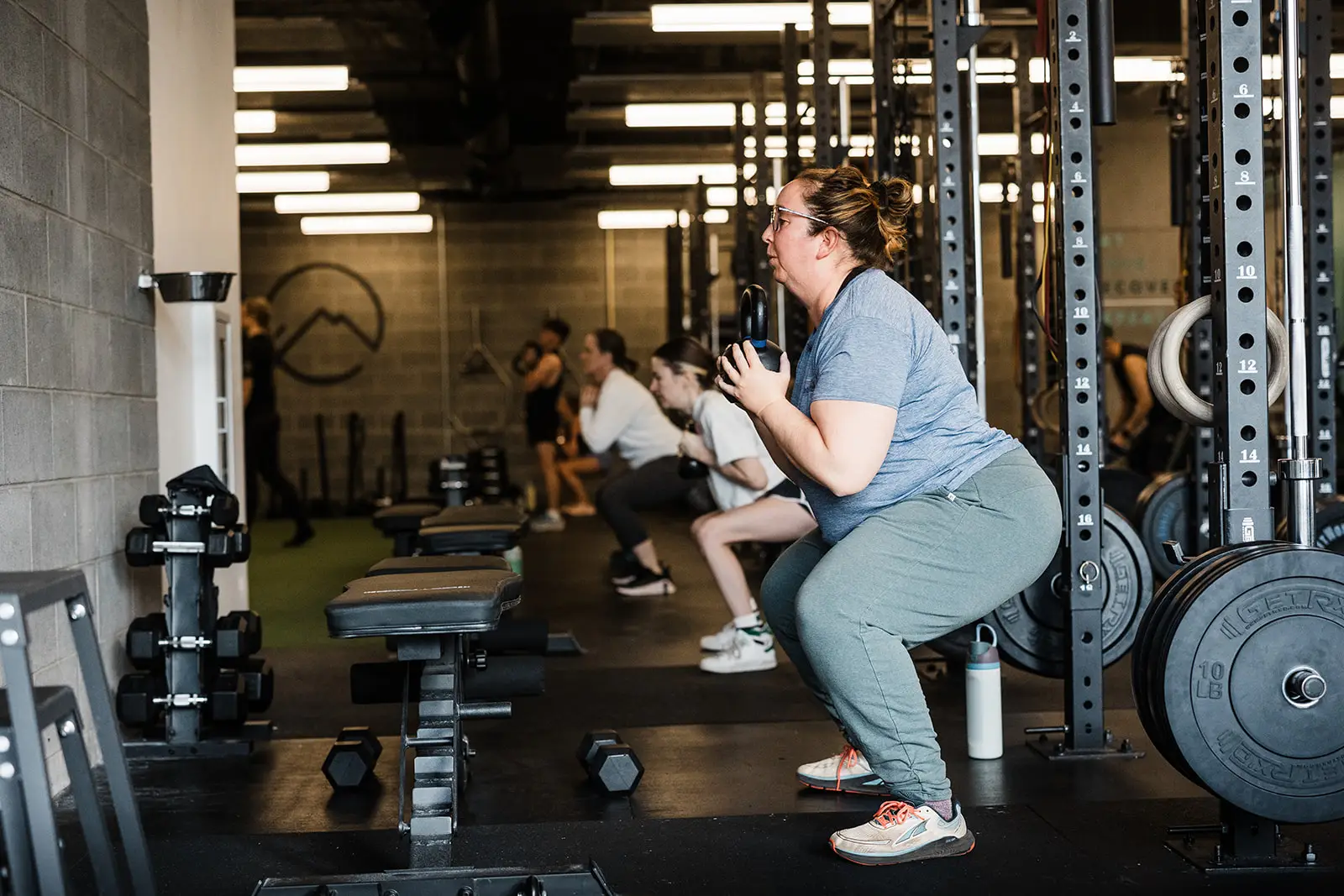
Strength training is exercise that uses resistance—weights, bands, machines, or your own body weight—to build strength. With regular practice and gradually increasing challenge, it improves your ability to produce force, control movement, and handle physical demands.
That might mean putting your bike on the rack more easily, feeling stronger on skis, carrying a child, or getting up from the floor comfortably. It can also mean walking into the gym with a plan and knowing your time there is getting you somewhere.
You may already run, hike, or ride regularly and be new to lifting. You might be returning after time away, or using a few gym machines without knowing whether you’re making progress. Learning what strength training involves can help you choose a useful next step.
At EVOLVE Flagstaff, we help adults build strength for their health and the activities they care about outside the gym. If you’re looking for guidance, find your starting program at EVOLVE.
What counts as strength training?
Strength training is also called resistance training, weight training, or simply lifting. Resistance is anything your muscles work against. A squat uses your body weight; holding a dumbbell adds resistance. A band or leg-press machine can challenge your muscles, too.
Each option has advantages:
- Bodyweight exercises are accessible and can be adjusted by changing position, range of motion, or leverage.
- Resistance bands are portable and useful for home workouts.
- Machines guide the movement and make resistance straightforward to adjust.
- Free weights, including dumbbells, kettlebells, and barbells, offer many ways to train and increase the load.
Effective strength training combines suitable exercises, enough resistance to challenge your muscles, and progression as your ability improves.
At EVOLVE, we also include balance, stability, and movement at different speeds and in different directions. These qualities help you use your strength when you step onto uneven ground, change direction, or react quickly.
What are the benefits of strength training?
More capacity for everyday life and outdoor activities
Getting stronger increases the force you have available. A familiar demand—lifting luggage, climbing stairs, or carrying groceries—can then take a smaller share of your capacity.
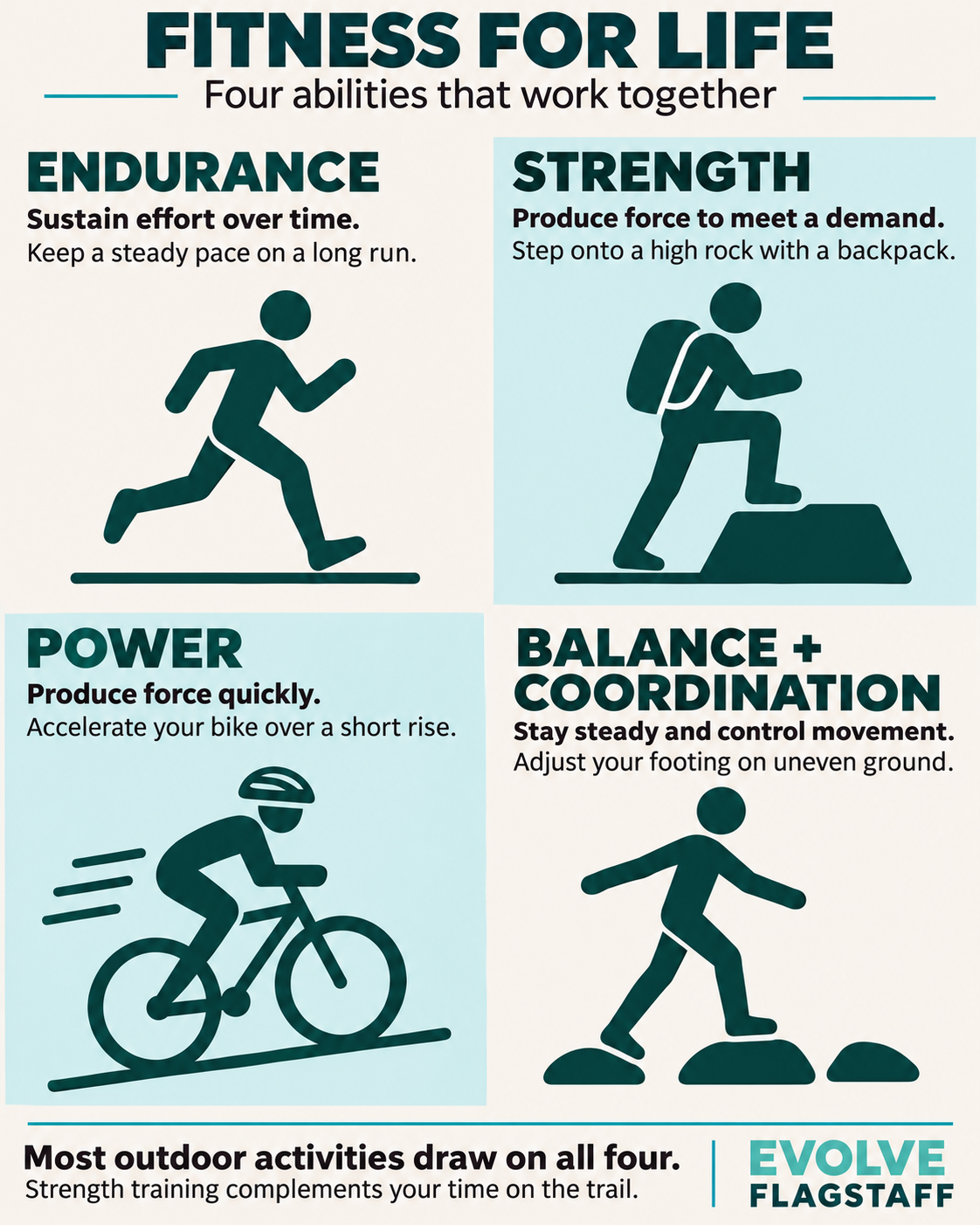
The same principle applies outdoors. Stepping onto a high rock, controlling a loaded bike, and carrying a backpack all require strength. Training gives you a deliberate way to build that capacity and practice controlling it.
Your goal might be better performance, more confidence joining an outing, or enough energy to enjoy the whole day.
Muscle, bone, and connective-tissue health
Resistance training provides a reason for your body to maintain and build muscle. Appropriately progressed loading also supports adaptations in bones, tendons, and other connective tissues.
These changes develop through repeated training and recovery. Gradually increasing the challenge gives your body opportunities to adapt while keeping the work appropriate for your current ability.
Strength training for women
Strength training benefits women throughout life, from building athletic skills in adolescence to maintaining strength and independence in older adulthood.
Girls may reach adulthood with fewer opportunities to learn lifting, even when they’ve spent years playing sports. That can leave useful preparation for performance and injury prevention underdeveloped. Young female athletes have higher rates of ACL injuries in comparable cutting and jumping sports; programs that combine strength, landing technique, and other movement training help reduce that risk. Differences in training opportunities are one part of a complex picture.
Hormones influence muscle and bone throughout life. Women generally have less muscle mass than men, making the deliberate development and maintenance of strength especially valuable. Despite these factors, women can still respond very well to training: research finds similar proportional muscle growth in women and men following the same resistance training.
Bone health is another reason to start early and continue throughout adulthood. Women generally develop lower peak bone mass and have a higher risk of osteoporosis. Strength training provides a way to load the skeleton while building the muscle needed to support everyday activity.
During perimenopause and the transition through menopause, hormonal shifts can make maintaining muscle more challenging, and declining estrogen accelerates bone loss. That makes consistent strength training particularly important as women enter their 40s and beyond. The National Institute of Arthritis and Musculoskeletal and Skin Diseases explains these bone-health risks.
Whether you want stronger legs for skiing, more confidence handling weights, or a routine that supports long-term health, your current ability and goals can guide where you begin.
Starting or continuing strength training after 40? Our guide to strength training for women over 40 covers muscle, bone health, and training through midlife.
Staying athletic in your 40s and beyond
Feeling athletic involves several abilities: producing force, moving quickly, balancing, and coordinating your body through different positions.
Some outdoor activities develop these qualities more thoroughly than others. A well-rounded training program can address the gaps and help you maintain the abilities you want for changing seasons, sports, and everyday life.
Power—the ability to produce force quickly—is especially useful when you need to catch yourself, move over an obstacle, or respond to changing terrain. Strength training can provide a foundation for practicing those faster movements as well.
Want to keep feeling athletic? Explore how strength, power, and balance work together in our guide to staying athletic as you get older.
Maintaining capability in later adulthood
In later adulthood, strength supports the practical tasks that make independence possible: getting out of a chair, carrying shopping, climbing stairs, and getting down to—and up from—the floor.
Balance and the ability to produce force quickly also matter when responding to a stumble or an unexpected change in footing.
These abilities remain trainable. Exercises can be adjusted to someone’s current capacity and made more challenging as they improve. Training goals might include traveling comfortably, gardening, playing with grandchildren, or continuing a favorite outdoor activity.
Common concerns about getting started
What if I feel out of place in the gym?
A gym can feel unfamiliar even when you’re confident in other activities. Knowing how to ride a technical trail doesn’t automatically teach you how to adjust a squat rack.
Good orientation and coaching make a difference. Before a first visit, ask who will show you around, how exercises are adapted, and what you should expect during the session.
During a coached workout, you should be able to ask questions, practice unfamiliar movements, and get help choosing an appropriate challenge. Being new to lifting is a starting point your coach can work with.
Nervous about your first visit? Read our practical guide to working through gym anxiety.
Do I need strength training if I already run, hike, or bike?
Strength training can add something useful to an already active life because it provides a different training stimulus.
Cardiovascular exercise develops your ability to deliver and use oxygen during sustained activity. That fitness influences how demanding a pace feels, how quickly you get out of breath, and how long you can keep going.
Strength affects how much force you can produce. That matters when you need to step onto a high ledge, lift your bike over an obstacle, or control your body and equipment through a demanding position. Sometimes the limiting factor is whether you can produce enough force to complete the movement at all.
The two overlap during real activities. A steep hike may challenge both your cardiovascular system and your leg strength. Being out of breath tells you the activity is demanding; it doesn’t tell you whether it provides enough progressive resistance to build full-body strength.
Outdoor activities also involve repeated patterns. Strength training lets you deliberately increase resistance and train movements that your usual activities cover less thoroughly, including upper-body pushing and pulling.
A broader foundation of strength, balance, and power can help you feel more prepared when you transition between seasons or join an unexpected weekend adventure. Your sport skills, endurance, and recent activity still matter, too.
For a closer look, read why runners need strength training. Our cardiovascular training guide explains the complementary role of endurance exercise.
What if I’m worried about getting hurt?
Exercise selection, technique, resistance, and progression all help determine whether a workout fits you.
Coaching provides someone who can watch how you move, explain the exercise, adjust the challenge, and help you decide when to progress. Tell your coach about concerns or previous injuries so they can account for them.
If pain or an existing injury significantly affects your activity, physical therapy may be an appropriate starting point for assessment and rehabilitation.
Will I be too sore for my other activities?
Unfamiliar exercise can cause soreness, especially when you start or substantially change your workout.
Begin with a manageable amount of work and build from there. While you learn how you respond, avoid putting a demanding new leg workout immediately before an important ride, run, or ski day.
Tell your coach about those plans. A useful strength routine should account for the other activities in your week.
Soreness is an unreliable measure of workout quality. You can make progress without being very sore. If training repeatedly leaves you unable to enjoy your usual activities, the workload needs adjusting.
Will lifting make me bulky?
Building a large amount of muscle generally takes sustained, deliberate training and nutrition over time. Muscle changes develop gradually, giving you opportunities to assess your progress and adjust your goals.
If you want to look more muscular or “toned,” strength training can help you build muscle. If health and outdoor performance matter more to you, those can guide your training. Appearance goals can also coexist with wanting to feel stronger and more capable.
Our article on strength training myths and misconceptions explores common questions about weights, muscle, and training.
How to start strength training
1. Choose your setting and level of coaching
Consider a coached strength class as a starting option. A well-coached class provides a planned workout, instruction, and help choosing exercises and resistance that fit your ability.
This can be useful even if you’re already fit. Learning to lift is a skill, and feedback helps you understand what to do and how an appropriate effort feels.
Some people prefer more individual attention. Small-group personalized training or one-on-one coaching can provide additional time for learning, specific goals, or adjustments.
When comparing options, ask:
Will someone help me learn unfamiliar movements?
How are exercises adjusted for different abilities?
Will I get feedback on technique and resistance?
Does the schedule fit my week?
Does the training support my other activities?
You can also train independently at a gym or at home. At a new gym, a simple plan and an equipment orientation can help you get comfortable with what to do and how to use the space. Home workouts offer convenience, though protecting the time from distractions and finding ways to increase resistance with limited equipment can take some planning. If you get stuck with either approach, coaching can help you work through the specific problem.
Considering a class? Learn more about the structure, feedback, and support offered by coached strength training classes.
2. Make room for two consistent sessions
Two full-body sessions per week is a useful starting approach for many adults. It also aligns with the CDC’s recommendation to strengthen all major muscle groups on at least two days each week.
Choose days you can realistically protect, preferably with a recovery day between them. Monday and Thursday, for example, may leave room for your usual weekend activities.
The right schedule accounts for your workload, recovery, and outdoor plans. Consistency gives you repeated opportunities to practice and improve.
3. Follow a repeatable plan
A full-body program usually includes several basic movement patterns:
Squat or lunge: bending through your hips and knees, as in standing or stepping up.
Hinge: bending primarily at your hips to pick objects up, with stability at the core and power through the legs.
Push: moving resistance away from you, as in a push-up or press.
Pull: bringing resistance toward you, as in a row or pulldown.
Carry or trunk and core control: controlling your position while carrying weight or performing an exercise such as a plank.
Each category includes many options. A coach can help select versions that suit your ability and goals.
Repeating exercises gives you time to learn them and compare your performance across workouts. Want to see how these patterns come together? Our full-body strength program provides a concrete example with demonstrations and ways to adjust the exercises.
4. Learn what an appropriate challenge feels like
Workout plans commonly use sets and reps. A repetition is one complete movement; a set is a group of repetitions followed by rest. Three sets of 8–12 reps means performing 8–12 repetitions, resting, and repeating for three sets total.
The appropriate resistance depends on the exercise and your current strength. Begin with a load you can control while learning the movement, then work toward sets that meaningfully challenge your muscles.
In our workout guidelines, we generally recommend finishing most sets feeling that you could perform another one to three good repetitions. A coach can help you learn to judge that effort while maintaining technique.
Warm up before your working sets and rest between them so you can repeat the movement well. Our usual rest guideline is one to two minutes, with adjustments when needed.
For more detail, read our strength training workout guidelines.
5. Increase the challenge as you improve
Progressive overload means gradually increasing what you ask your body to do.
For example, a program might call for 8–12 repetitions. You begin with a weight that makes eight good repetitions challenging. Over time, you build toward 12. Once you reach the top of the range with good technique and the intended effort, you can increase the weight and build up again.
Other options include a stronger band, a more demanding variation, or additional sets. Tracking your workouts helps you and your coach decide what to change.
How will I know if strength training is working?
Look for changes you can observe:
You lift more weight for the same repetitions.
You complete more repetitions with the same weight.
A movement feels more controlled or requires less assistance.
You understand your setup and need fewer reminders.
A relevant task outside the gym feels easier.
Early progress often includes learning movements and becoming more coordinated. Changes in muscle and broader physical capacity develop with continued training.
Individual workouts will vary. Sleep, stress, and a demanding ride or run can affect what you manage that day. Your training record helps you see the longer pattern.
Keep a goal outside the gym in view, too. If you want loading your bike to feel easier or carrying a backpack to feel more manageable, pay attention to those tasks alongside your workout numbers.
Find your starting program at EVOLVE
If you want guidance, EVOLVE offers several ways to begin strength training in Flagstaff.
EVOLVE Strong provides coached group classes with technique instruction and exercises scaled to your level. Foundations offers personalized training in a small group when you want more individual guidance. Personal Training provides one-on-one attention, while Open Gym suits people comfortable carrying out their workouts independently.
Your current ability, goals, and preferred level of coaching help determine the best program for you. If you’re new to lifting, a well-coached group class can be a great place to begin; more individualized support is available if you want it. Look for a setting where you can learn, feel appropriately challenged, and build strength for the activities and everyday demands that matter to you.
Find Your Starting Point
Compare EVOLVE's strength training options or take the quick program quiz to find the coaching and support that fit your goals.