
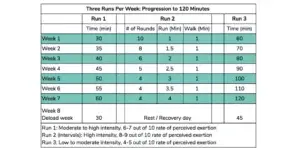
90 and Beyond: Three running volume progression programs
One of our most popular articles presented two return to running progressions. They are designed to help people who want to start or return to running, especially after an injury, progress from not running at all to running for 60 minutes continuously.
We’ve had a lot of great feedback about these programs. If you’re actively managing an injury and you follow the program, they to work brilliantly. Everyone is different, and so there might be some bumps in the road, but in general, most people respond very well to them.
Perhaps the most popular question we get is, “What should I do after the program?”
So, we’ve put together three additional programs to help you progress your running volume beyond those introductory programs
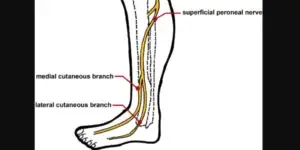
Superficial peroneal nerve injury in a professional runner: A case study on the importance of diagnosis
Diagnosis in physical therapy is often unclear, and that ambiguity can lead to a frustrating lack of progress. In this case study, we walk through how we approached diagnosis and management of ankle pain in a professional runner — what looked at first like a straightforward ankle sprain turned out to be more nuanced. Getting the diagnosis right was essential to getting her to the starting line, and the podium, of a 100km race.
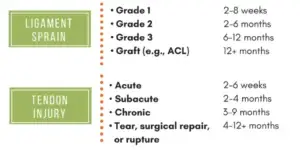
Tissue Healing Timelines: How Long Will This Take to Heal?
After an injury, tissue takes time to heal. Pain is not always a great indicator of healing, as symptoms often decrease when we remove aggravating factors. So, understanding how long various tissues take to heal can be an important part of the rehab journey.
In this piece, we break down average healing times for common injuries, why eliminating pain isn’t the same as full tissue repair, and what physical therapy can (and can’t) do to speed up the process. Understanding this distinction changes how you approach recovery — and how you know when you’re really out of the woods.

How to warm up the shoulders
If you’re not warming up, you’re leaving performance on the table, and increasing your injury risk. Last week’s article explored why a warm up is an essential aspect of every workout, and outlined a warm up for running.
Similar to runners, athletes performing overhead or other shoulder movements should have a dialed warm up routine as well. This can help cranky shoulders feel and perform better, and reduce the risk of overuse injuries related to poor shoulder mechanics, or deficits in rotator cuff or scapular muscle activation.

How (and why) to warm up for running
We recently shared two programs to help new or injured runners progress their volume to help reduce injury risk. In that article, we shared a general running warm up that we recommend for most people. We think warming up for running is so crucial that it deserves its own post. We see too many people skip a warm up altogether. Or, they use valuable warm up time ineffectively.
Why do we need to warm up at all? What should a good warm up accomplish? What’s the best way to structure a warm up? How should you warm up for running? Let’s dig in.
Habit 3: Hydration and Sleep
Hope your New Year is off to a great start! We’re going to keep building with two new habits: Hydration and sleep